
Introduction: Why FOG Is a Growing Problem in the UK
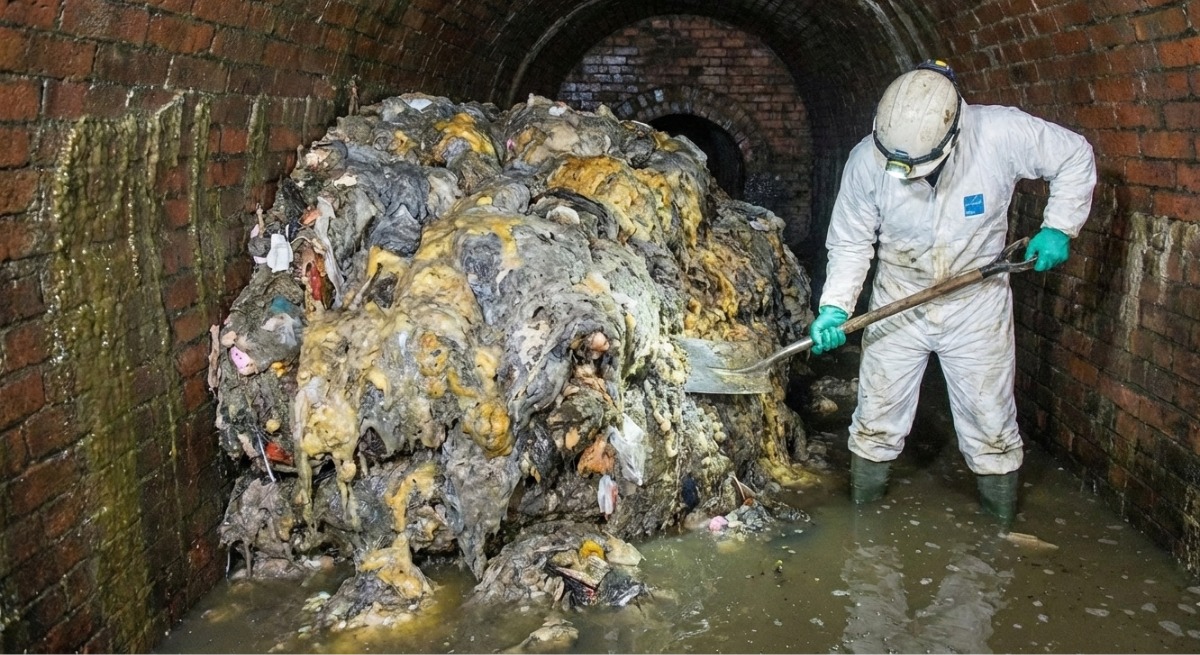
FOG UK sewer systems are increasingly affected by fats, oils and grease (FOG), representing one of the most significant challenges facing wastewater infrastructure today. While often associated with commercial food premises, a substantial proportion of FOG-related blockages originate from domestic households, where used cooking oil and food residues are disposed of incorrectly via sinks and drains.
For UK water companies and local authorities, unmanaged FOG leads to increased operational costs, environmental risks and service disruptions. As urban populations grow and sewer infrastructure ages, the need for effective FOG prevention strategies has become a national priority.
UK water companies consistently identify FOG as a major cause of sewer blockages, according to industry-wide wastewater performance reporting.
Preventing FOG at source is increasingly recognised as a cost-effective alternative to reactive maintenance.
👉 https://ekofunnel.com
How FOG Enters the UK Sewer Network
Domestic cooking oil and household behaviours
In many UK households, used cooking oil, pan grease and food residues are routinely poured down the sink. Although liquid when warm, these substances cool rapidly once inside the sewer system, creating ideal conditions for solidification and build-up.
Food waste and drainage misuse
FOG is often accompanied by food scraps and improper waste disposal. Combined with misconceptions about “flushable” products, this behaviour accelerates the formation of blockages.
Household vs commercial FOG sources
While commercial premises are subject to grease management regulations, domestic FOG is largely unregulated. This makes household behaviour one of the most difficult yet impactful areas for intervention.
Learn more about household-focused FOG prevention approaches: https://ekofunnel.com/outreach-materials/
What Happens to FOG Inside Sewer Systems
Cooling and solidification
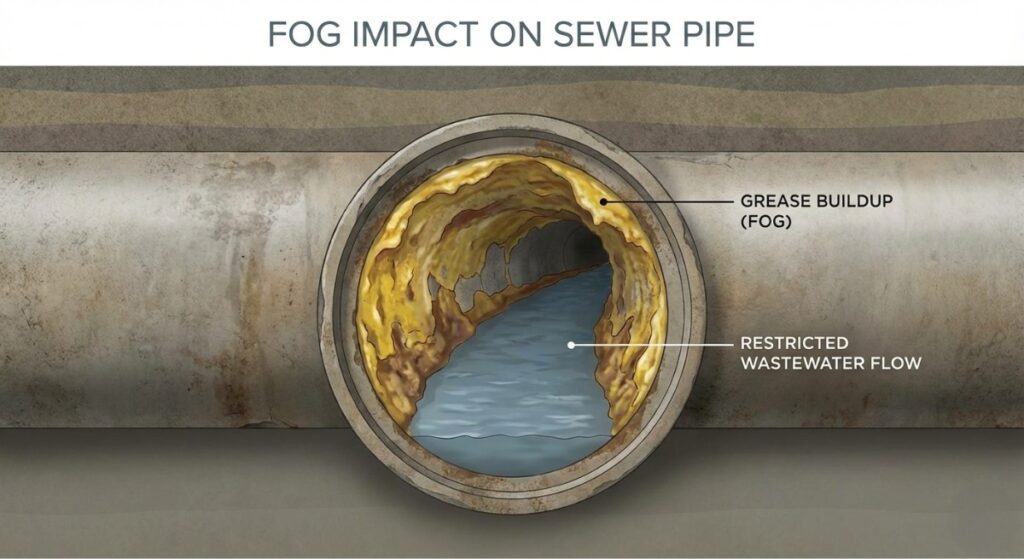
Once FOG enters underground pipes, temperatures drop and oils begin to harden. Over time, this creates a waxy layer that coats pipe walls.
Adhesion and build-up
Solidified fats trap other materials such as food waste, grit and wipes. This progressive accumulation reduces pipe capacity and restricts flow.
Interaction with wet wipes and solids
FOG acts as a binding agent, contributing to the formation of large blockages commonly known as fatbergs.
The Scale of the Problem in the UK Context
Frequency of FOG-related blockages
UK water companies consistently report FOG as a leading cause of sewer blockages, particularly in residential catchments.
Urban vs rural challenges
Urban areas with high population density face increased risk due to volume, while rural networks often suffer from smaller-diameter pipes more susceptible to obstruction.
Seasonal patterns
Blockages often increase during colder months, when fats solidify more quickly.
See how prevention-focused strategies help reduce blockage frequency:
👉 https://ekofunnel.com
Operational and Financial Impact on Water Companies
Reactive maintenance and emergency response
FOG-related blockages lead to frequent call-outs, requiring jetting, vacuum tankers and manual intervention.
Increased operational costs
Unplanned maintenance diverts resources from proactive asset management.
Long-term asset degradation
Repeated blockages accelerate pipe corrosion and reduce asset lifespan.
Environmental Consequences of FOG Blockages
Sewer overflows and pollution
Blocked sewers increase the likelihood of wastewater discharges into watercourses.
Risks to ecosystems
FOG pollution negatively impacts water quality and biodiversity.
Regulatory implications
Environmental incidents may result in regulatory action and reputational damage.
The Role of Local Authorities in FOG Prevention
Cross-departmental responsibility
FOG prevention involves water, waste, environmental and communications teams.
Collaboration with water companies
Joint initiatives improve consistency and effectiveness.
Public education as prevention
Clear guidance to residents is one of the most effective prevention tools.
FOG prevention tools for councils and authorities: https://ekofunnel.com/outreach-materials/
Behaviour Change at Household Level: The Missing Link
Limits of infrastructure-only solutions
Infrastructure upgrades alone do not address domestic disposal behaviour.
Barriers to correct disposal
Lack of awareness and convenience remain key challenges.
Importance of simplicity
Solutions must be easy to understand, use and communicate.
Practical Tools to Reduce Household FOG at Source
Communication-led interventions
Clear messaging helps residents understand the impact of FOG.
Physical collection and containment solutions
Providing households with practical tools to collect used cooking oil prevents FOG from entering sewers.
Integration into existing campaigns
FOG prevention works best when integrated into broader environmental initiatives.
Discover practical FOG collection solutions: https://ekofunnel.com
Measuring the Impact of FOG Reduction Initiatives
Key performance indicators
Blockage frequency, maintenance costs and complaints are commonly monitored.
Data-driven evaluation
Before-and-after comparisons demonstrate campaign effectiveness.
Long-term benefits
Prevention delivers sustained operational and environmental improvements.
Conclusion: Prevention as a Cost-Effective Infrastructure Strategy
Fats, oils and grease pose a serious threat to the performance and sustainability of UK sewer systems. While the operational impact is well known, the most effective solutions increasingly lie at the source.
By combining clear communication with practical household tools, water companies and local authorities can shift from reactive maintenance to proactive prevention—protecting infrastructure, budgets and the environment.
Supporting FOG Prevention Initiatives in the UK
Ekofunnel supports UK water companies, local authorities and environmental partners with practical, campaign-ready solutions to reduce FOG at source.
Contact us to discuss FOG prevention initiatives:
https://ekofunnel.com/contact-us/